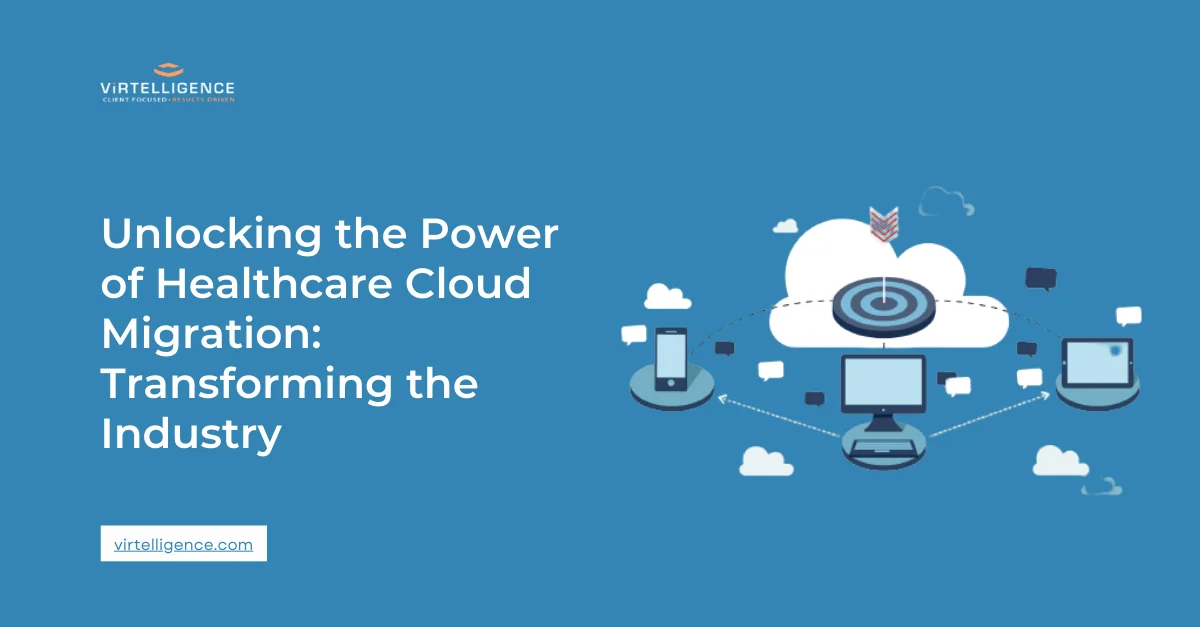
Not long ago, the idea of storing sensitive patient data anywhere but a secure, on-premise server was unthinkable. Today, healthcare organizations are leading the charge to the cloud, driven by the promise of enhanced security, unprecedented scalability, and the agility needed to innovate in a rapidly changing landscape.
Why the Cloud is a Game-Changer for Healthcare
Migrating to the cloud is more than just an infrastructure upgrade; it's a strategic business decision that unlocks a host of benefits:
- Cost Optimization: The cloud eliminates the need for massive upfront investments in hardware and the ongoing costs of maintenance, cooling, and physical security. With a pay-as-you-go model, organizations can scale their resources up or down as needed, ensuring they only pay for what they use. [1]
- Enhanced Security and Compliance: Leading cloud providers like AWS, Google Cloud, and Microsoft Azure have invested billions in security infrastructure and expertise. They offer robust, HIPAA-compliant environments with advanced security controls, automated threat detection, and disaster recovery capabilities that are often far more sophisticated than what a single organization could build on its own. [2]
- Scalability and Flexibility: The cloud provides the ability to scale computing resources on demand. This is critical for handling the massive datasets generated by modern healthcare, from high-resolution medical imaging to genomic sequencing. It also allows for the rapid deployment of new applications and services to meet evolving patient and provider needs.
- Accelerated Innovation: The cloud provides access to a vast ecosystem of advanced services, including artificial intelligence, machine learning, and big data analytics. This allows healthcare organizations to build and deploy innovative solutions—such as predictive analytics for disease outbreaks or personalized treatment platforms—without the need for specialized in-house expertise. [3]
Developing a Successful Cloud Migration Strategy
A successful cloud migration requires a clear and comprehensive strategy. Key steps include:
- Assessment and Planning: Begin by assessing your current application portfolio, infrastructure, and security posture. Identify which workloads are best suited for the cloud and develop a phased migration plan.
- Choosing the Right Partner: Select a cloud provider and, if needed, a migration partner with deep expertise in healthcare and a proven track record of successful, compliant migrations.
- Prioritizing Security and Compliance: Security and compliance must be at the forefront of your migration strategy. Ensure that your cloud environment is configured to meet all HIPAA and other regulatory requirements from day one.
- Training and Change Management: Migrating to the cloud requires a shift in skills and mindset. Invest in training your IT staff and ensure that all stakeholders understand the benefits and implications of the move to the cloud.
The Future of Healthcare is in the Cloud
Cloud migration is no longer a question of if, but when. By embracing the cloud, healthcare organizations can build a more secure, efficient, and innovative foundation for the future of patient care.
References
- RSM. (2025). Cloud migration: Boosting efficiency and patient care in health care. RSM US. https://rsmus.com/insights/industries/health-care/cloud-migration-boosting-efficiency-and-patient-care-in-health-care.html
- Alation. (2023). Why Healthcare & Life Science Is Moving to the Cloud. Alation. https://www.alation.com/blog/why-healthcare-life-sciences-is-moving-to-the-cloud/
- Deloitte. (n.d.). Health Care Cloud Migration Case Study. Deloitte. https://www.deloitte.com/us/en/what-we-do/capabilities/cloud-transformation/case-studies/health-care-cloud-migration-case-study.html
Private Cloud
Private clouds provide dedicated infrastructure, offering greater control over security, compliance, and performance. They suit organizations with strict regulatory requirements, applications requiring consistent high performance, or those with significant existing infrastructure investments. However, they sacrifice some of the economic and scalability advantages of public cloud.
Hybrid Cloud
Hybrid approaches combine public and private cloud, allowing you to keep sensitive data on-premise while leveraging public cloud for scalability and advanced services. This model provides flexibility but introduces complexity in managing workloads across environments and ensuring seamless integration.
Multi-Cloud
Multi-cloud strategies use multiple public cloud providers, avoiding vendor lock-in and enabling you to leverage each provider's strengths. However, this approach increases complexity and requires expertise across multiple platforms. It makes most sense for large organizations with diverse requirements and the resources to manage multiple cloud relationships.
Developing Your Migration Strategy
A comprehensive migration strategy balances speed, risk, and business value. It defines which applications migrate when, how they migrate, and what success looks like.
Prioritization Framework
Prioritize migrations based on business value, technical complexity, and risk. Start with applications that deliver quick wins—high business value with low migration complexity. These early successes build momentum, demonstrate value, and provide learning opportunities before tackling more complex migrations.
Consider dependencies when sequencing migrations. Applications that depend on others should generally migrate after their dependencies, or you need to plan for hybrid connectivity during the transition period.
Migration Patterns
Different applications benefit from different migration approaches. Simple applications with minimal dependencies might use rehosting—moving to the cloud with minimal changes. This approach delivers quick results but doesn't fully leverage cloud capabilities.
Replatforming makes modest optimizations during migration, such as moving to managed databases or containerizing applications. This approach balances effort with benefit, improving cloud efficiency without requiring complete redesign.
Refactoring redesigns applications to be cloud-native, leveraging services like serverless computing, managed containers, and platform services. This approach requires the most effort but delivers maximum cloud benefits—better scalability, lower operational overhead, and access to advanced capabilities.
Executing the Migration
Successful migration execution requires detailed planning, rigorous testing, and careful risk management. Each migration should follow a proven process that minimizes disruption and ensures quality.
Migration Waves
Organize migrations into waves—groups of related applications that migrate together. Each wave should be small enough to manage effectively but large enough to deliver meaningful value. Typically, waves span 2-4 weeks, allowing time for preparation, execution, and stabilization before the next wave begins.
Between waves, conduct retrospectives to identify what worked well and what needs improvement. Apply these lessons to subsequent waves, continuously improving your migration process.
Testing and Validation
Comprehensive testing before cutover prevents production issues. Test functional correctness, performance under load, disaster recovery procedures, and integration with dependent systems. Involve business users in user acceptance testing to validate that migrated applications meet their needs.
Conduct migration dry runs in non-production environments to identify issues and refine procedures. These rehearsals reduce risk and build team confidence before production migration.
Cutover Planning
Plan cutover carefully to minimize downtime and user impact. For critical applications, consider phased cutover approaches like blue-green deployment or canary releases that enable quick rollback if issues arise.
Communicate migration schedules clearly to all stakeholders. Ensure support teams are prepared for increased volume during and after cutover. Have rollback plans ready in case migration encounters unexpected issues.
Cost Management
Cloud's pay-as-you-go model offers economic advantages but requires active management to prevent cost overruns. Organizations that don't manage cloud costs actively often find their cloud bill exceeds on-premise costs.
Right-Sizing Resources
Cloud makes it easy to provision large instances, but oversized resources waste money. Right-size instances based on actual utilization, not peak capacity. Use monitoring data to identify underutilized resources and downsize them appropriately.
Leverage auto-scaling to match resources to demand automatically. Scale up during peak periods and scale down during quiet times, paying only for what you need when you need it.
Reserved Instances and Savings Plans
For predictable workloads, commit to reserved instances or savings plans that offer significant discounts in exchange for usage commitments. These programs can reduce costs by 30-70% for stable workloads.
Cost Allocation and Chargeback
Implement cost allocation tagging to track spending by application, team, or business unit. This visibility enables accountability and helps identify optimization opportunities. Consider implementing chargeback or showback models where teams see their cloud consumption costs, incentivizing efficient resource usage.
Security in the Cloud
Cloud security follows a shared responsibility model—the cloud provider secures the infrastructure, while you secure your applications and data. Understanding this division and implementing appropriate controls is critical.
Identity and Access Management
Implement least-privilege access controls, granting users and services only the permissions they need. Use multi-factor authentication for all accounts, especially those with administrative privileges. Regularly audit access permissions and remove unnecessary access.
Leverage cloud-native identity services that integrate with your existing identity providers, enabling centralized authentication and authorization across your cloud environment.
Data Protection
Encrypt data at rest and in transit. Use cloud-provided encryption services or bring your own keys for sensitive data. Implement data classification policies that ensure appropriate protection based on sensitivity.
Design backup and disaster recovery procedures that protect against data loss. Test recovery procedures regularly to ensure they work when needed.
Network Security
Implement network segmentation using virtual private clouds, subnets, and security groups. Restrict network access to only what's necessary, following zero-trust principles. Use cloud-native firewalls and intrusion detection systems to monitor and protect network traffic.
Post-Migration Optimization
Migration is not the end goal—it's the beginning of continuous optimization. Cloud environments offer capabilities and services that evolve constantly. Organizations that actively optimize their cloud deployments realize increasing value over time.
Performance Optimization
Monitor application performance and identify bottlenecks. Cloud platforms offer numerous services to improve performance—content delivery networks for global distribution, caching layers to reduce database load, and managed services that handle scaling automatically.
Architectural Evolution
As you gain cloud experience, evolve your architecture to better leverage cloud-native capabilities. Adopt serverless computing for event-driven workloads, use managed databases to reduce operational overhead, and implement microservices architectures that enable independent scaling and deployment.
Conclusion
Successful cloud migration requires strategic planning, careful execution, and ongoing optimization. Organizations that approach migration thoughtfully—assessing readiness, choosing appropriate strategies, managing costs actively, and continuously optimizing—realize transformative benefits. The cloud becomes not just infrastructure, but a platform for innovation that enables faster time to market, improved scalability, and access to cutting-edge capabilities that drive competitive advantage.